And so, here we are again...
A project completed. The LAX story went down at four this morning and at four twenty I was already revising it! I am again sad that I won't see my characters for a while. I'm also sad for another reason. This is the first story I've written that deals with experiences I've had in the recent past.
Before, my fiction centered around ideas I had, some taken from events in my life or the news, but mostly from my imagination. The LAX story is almost a log of the things I went through with my Josephine and the ANA ticket counter account. Most of it is fictitious, but the forty percent that is not is drawn almost word for word from interactions I had at the airport. Now that it's over, it feels like I completed therapy. I got it off my chest. I'm lighter.
Yes.
My Josephine really did a number on me. But there are other projects that need my attention now. Before that, however...
With the LAX story complete, I'm catching up on my reading. I will do this for a few days before I go into 2015 phase 2. And then, my friends...that's when things start to get interesting.
I have to say that I picked
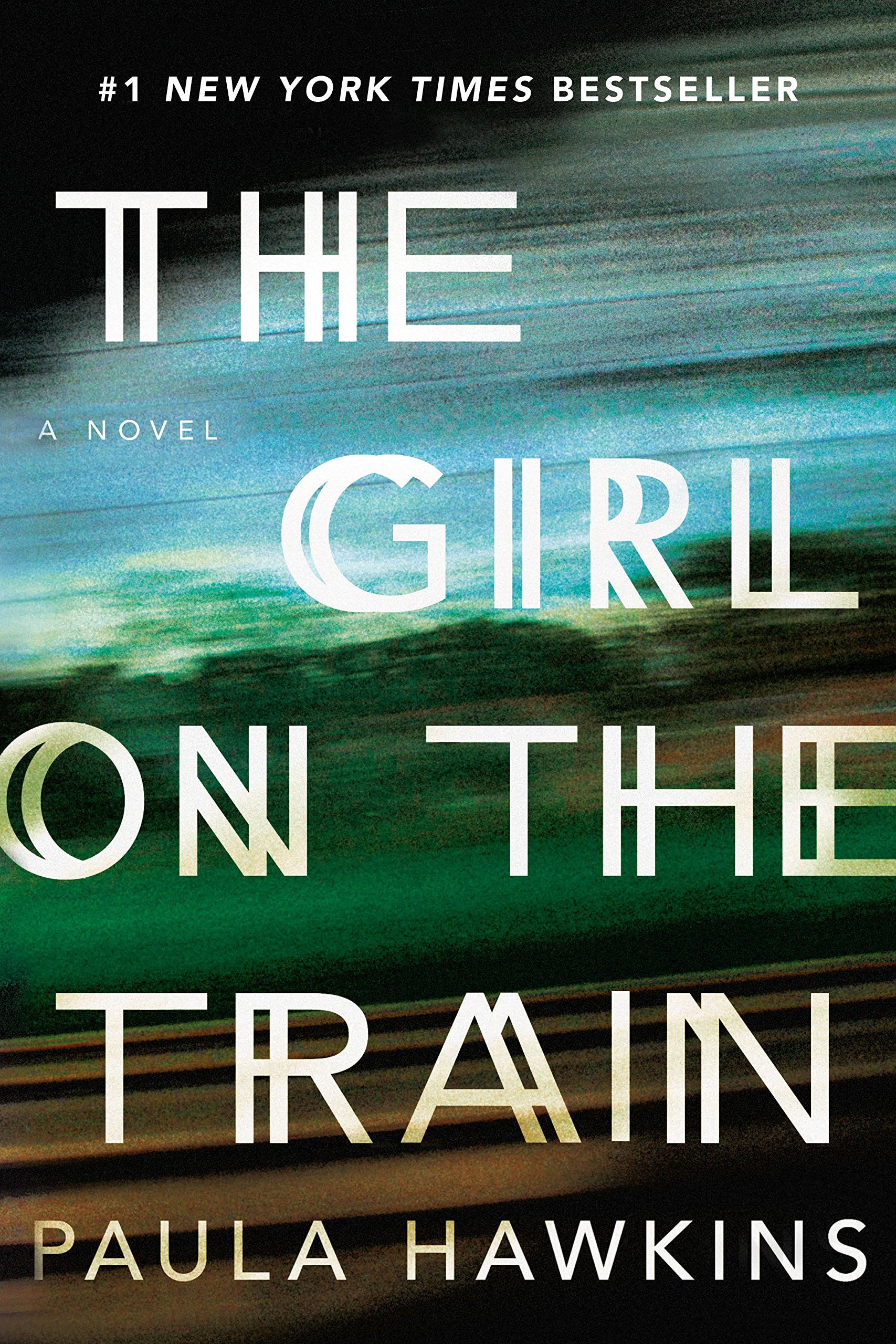
The Girl on the Train because our library has a list of over a hundred people waiting to read a free copy. Many liken it to
Gone Girl, a book which I enjoyed, so I thought I would give this a try.
My experience with the book was different than my experience reading
Gone Girl. I can tell you right now that the two books are nothing alike. Sure, the premise is the same, but in the end,
The Girl on the Train is a classic whodunit;
Gone Girl starts out that way, but does a paradigm shift midway through the book and becomes a sort of thriller.
Overview:
Author: Paula Hawkins
Genre: Mystery
Premise: Dysfunctional, alcoholic Rachel tries to help solve the disappearance of Megan, a married woman who repeatedly cheats on her husband with her therapist.
 What didn't work for me:
Comma splices
What didn't work for me:
Comma splices
Here is an example of a comma splice in
The Girl on the Train:
She'd have driven him mad in the end, I really think that--she'd have ground him down, she'd have made him into something he's not.
The text of
The Girl on the Train is full of them. They are more persistent in the first half of the book and wind down by the end.
Now, normally, I would be okay with a writer manipulating the English language for stylistic reasons. We take liberties with grammar to create effects. Some writers take advantage of this, while others are strict about adhering to grammar rules.
It's.
Just.
A preference.
There is an effect in the example above. We have been trained since childhood to stop when we reach a period. It signals an end, like the red light signals you to stop when you're driving. We don't think about it. This just happens naturally while we read.
We writers know this and take advantage of it.
The important thing is to create an effect that is understandable, letting the reader know that you're trying to do something different! Otherwise, it comes across as a mistake. Or worse, the writer takes such liberties with the text that it comes across as chaotic and confusing. Imagine reading a book with no punctuation! Or imagine reading a book that just had sentence fragments.
For the life of me, I didn't understand why Paula Hawkins had so many comma splices. What was the effect? You're supposed to pause when you find a comma in a sentence. And I did. After. Each. One. Ahhhhhh! Why is she doing it? Why? Tell me Paula, why? Am I too stupid to get it?
Naturally, this distracted my reading and I sometimes found it hard to focus.
Seriously, what was the effect?
Plot pace
The mystery doesn't start right away. I have read reviews that say this plot is lightning fast, but I didn't think so. You have to read more than thirty percent of the book before Megan disappears. And when the mystery finally starts, it moves as fast as that train that Rachel rides every day to her non-existent job.
After that, the story is a little more interesting. The pace doesn't become lightning fast until you're about ninety percent done with the book.
This is ironic since the book is short. At just over three hundred pages,
The Girl on the Train should have been a fast, fast read.
Characterization
Oh, man, there are so many fucked up people in this book! Normally, I would enjoy this--since messed up people are more interesting.
With
The Girl on the Train, it is clear that the author just wants to give clever twists to typical whodunit characters of hardboiled detective fiction.
There's the detective, in this case Rachel. In most private eye novels, the detective has a drinking problem. Rachel is a full blown alcoholic who has black outs--a plot device. The twist is that her misery takes center stage during that first thirty percent of the novel before Megan disappears. Joy!
There's the femme fatale, in this case Megan. She is the typical seductress willing to get men to do her bidding by manipulating their sexual desires; she comes complete with a seedy past. The twist here is that she is also the victim.
And then there's Scott, Megan's husband, who is the patsy and most obvious suspect. This isn't even a spoiler! His only purpose in this book is to give us another red herring. Did he do it? He's violent. He's jealous. He's too obvious. In the case of Nick from
Gone Girl, I really didn't know if he had done it or not; that author beautifully focused on him and his actions. The twist for Scott is that we never know what happens to him in the end. The story mentions his name, but who knows what happens to him.
What worked for me:
Okay, so I'll be fair and say that once you get into it--after you get used to Rachel's misery--the book is interesting. I couldn't stop reading it after I got to the 70% mark. Before you get there, though, there are other reasons to keep going. The main one is the realism.
The Realism
What is most gripping is the realism in this story. This book builds its rails and stays on them. Pun intended.
My biggest complaint about
Gone Girl is that at one point, it becomes a fantasy. Mad evil genius? Come oooooooon...
That point never came in
The Girl on the Train. Rachel's behaviors as an alcoholic are typical, but not to the point where I felt I was reading a textbook case. Many times an author will describe a person with a problem like alcoholism and it reads like a pamphlet. The black outs, the messes with vomit, the hiding of liquor and those gin tonics... all well done.
Scott, though too obvious to be the killer, works well as a jealous husband. The way he tries to check up on her and check her browser history and do those little things that jealous men do... It works. You really do get pissed with Megan and sympathize with him. But really, why would anyone this jealous get with a woman like Megan? It is excellent.
Kudos!
The crime, when the killer is revealed, is so mundane and realistic that it's disturbing. The things the killer does to try and get away with it are so stupid that you can believe that a regular person--who isn't an evil genius--would come up with the same ideas and make the same mistakes.
And then there's the final action in the book. There are no superhero moments here. Actually, the violence is apprehensive; the killer, when found out, believably wants to find some other way out, a peaceful way that will leave all parties alive. But throughout the novel, the author pushes and pushes these folks to a state of hysteria and bottled up aggression.
Rachel can't give up Tom, her former husband, and sinks deeper into alcoholism, which brings about more black outs during which she does bolder and more dangerous things. Tom doesn't know what to do with Rachel, who won't leave him and his new wife Anna alone; one time she even took hold of their newborn baby while completely drunk. Anna can't convince Tom to leave that city, that house, and start fresh somewhere away from Rachel; every time Rachel comes by, drunk, or calls the house, she is pressured into looking for alternatives in dealing with her. Scott slowly, but surely, builds up all the aggression that comes from having a pretty wife he rightly suspects is cheating on him. And Megan can't overcome the guilt that is the result of the things she did in her past and cannot function as a wife because of it--she's always trying to run away. And then there's the therapist, Kamal, whose affair with Megan nearly destroys him; it's horrible that she can't let this go and keeps trying to get him back for more.
These are just people pushed to a point where murder is an unfortunate, animal choice.
Overall:
If you have patience,
The Girl on the Train can entertain you for hours--if you fly to another country, for example.
It's not a perfect book, though, and often I wanted to put it down to do other things; Facebook was an attractive option during my reading of the book.
Overall, it's a fair little mystery that will likely lead to more improved versions of it as the author (hopefully) gets into her groove as a writer. For that reason, I'm going to buy another Paula Hawkins book when she writes one.
I can tell you though, if I see a comma splice in her next book, I'm putting it down!
LC / LA


